Air Berlin stewardesses are back in style – including their gloves. Perhaps we’ll see some civilized service even in America soon.
HAVE A QUESTION? EMAIL US AT midniteflite@juno.com.
WE ANSWER ALL E-MAILS.
WE ARE NOT AN AIRLINE… YET
My name is Vivian Lombeyda, and I am interested in becoming a flight attendant. I wish you can answer me as soon as possible. I would like to become one of your cabin crew members and would appreciate that you write me back with details.
Vivian Lombeyda, Nigeria
Thank you for your e-mail. However, we are not an airline, we area training facility and consulting company which assists people who are hoping to become flight attendants. Even if we were an airline, we could not help you much, because you need to take care of your immigration requirements before you can work in the U.S. We suggest that you check out your local airlines.
FROM INDONESIA
I’m Juli from Indonesia. I am 21 years old and still study in college. I would love to be a flight attendant, especially with Singapore Airlines (SQ). I will try to apply next year, after I finish my bachelor’s Degree. How can I get your book? Will it give me all the important information on becoming a flight attendant? Please write back as soon as possible. Thanks,
Juli
Thank you for your e-mail. I am glad that you’ll finish your degree before trying out for SQ. I suggest that you start preparing for your interview about three months ahead of the day when you plan to attend (roughly), and I think you need to make sure that you have a strong resume.
If you have not volunteered anywhere as yet (i.e. charities, hospitals) you should start doing it now, because airlines like to see that on your resume. It would also help that you get a part-time job in some service-oriented field, i.e. sales, hospitality, because your customer service skills will be scrutinized.
So, overall, I would recommend that after doing the things I have just mentioned, you get our Basic Flight Attendant Interview package when the time comes, and you’ll get with it also all the information on SQ (and other airlines’ interviews). You’ll also get all the questions they ask with the best answers to them and all the information with what to expect.
Make sure, however, that you meet all the other requirements by the airlines (height, weight, education, foreign languages)before you go ahead. If you do not meet any of the basic requirements, you’d be wasting money on preparation for your interview
Juli wrote back:
Thank you for your reply, the information is really useful. I see that I may have a little problem with my height. I am only 157 cm tall and Singapore Airlines minimum height is 158 cm. I’ll send you my photo after I am ready to prepare.
Juli
Your height could become a problem, even if it is just 1 cm – simply because that means that you are NOT meeting the basic requirements, and SQ usually does not compromise on that. You may need to look at other airlines and see if there are any that use smaller planes and have lower height requirements.
HOW ABOUT A B-777?
I saw that you have license plate frames with “My other vehicle is B-767.” Do you also have one with a B-777?
Sorry, the 767 is the only one we have.
T’WAS THE NITE BEFORE INTERVIEW…
I am interested in your resume services, but have some questions. I have decided I want to apply for a customer service/ticketing agent job instead of a flight attendant position. My money is tight, so I hope you can be brutally honest about whether or not your resume services are as helpful when tailored for a customer service position instead.
I am willing to pay if it is helpful, but with limited funds it is important to know if it is as beneficial, or perhaps you know someone else who does resumes for the customer service positions?
If you think your service is beneficial, I was trying to see if I could pay extra for expedited service. I am on California time, and just found out that there is an opening for a position in Santa Barbara, and since there are very few positions here in Southern California I really need to apply, but the deadline is for tomorrow, Friday (this e-mail was received late Thursday night).
Since it is California time I am on, I still have some time and hope that you still might be able to help. I just have to have it submitted online by some time on Friday (not sure about the cut-off time).
Sorry for so many questions. But I hope you can understand my concerns. Please e-mail me or call me asap so that I know what to do and so I can get the information to you asap if you can do it.
Thank you for your e-mail. Your resume is your calling card. You decide if it is beneficial.
FROM SINGAPORE
My name is Linda. I am 22 years old and live in Singapore. I don’t have a high qualification for the air stewardess career, but I speak fluent English. I was just wondering how can I start from scratch
Sincerely, Linda from Singapore
Thank you for your e-mail. I am not quite sure I understand what you mean by “not having high qualification for the position, so let me start with that. If you do meet all of the BASIC qualifications the airline is asking for, then it is worth applying and going for it. If, however, you are NOT meeting the basic qualifications that SQ asks for, then wait until you meet them.
You must remember that at the age of 22 “the clock is ticking” – by that I mean that you would need to get the needed qualification(s) you may be missing now as soon as possible, because SQ hardly hires anyone who is older than 25.
The additional things SQ is looking for are the number of languages you can speak, customer service experience (or how customer-oriented you are) and any volunteer activity. You might want to try to get as much of these as possible.
Do not forget that you will also have to appear in the “swimsuit competition” so you cannot have any visible tattoos, you have to have a nice figure, graceful style of walk, and, of course, you must be able to swim (you will be swimming in their pool in their uniform if you make it into the third round of the interview),
We do have all the information on SQ interviews, the price is US$39.95 and shipping to Singapore via air mail is US$11.00. We accept Pay Pal, credit cards and International Money Orders.
If you have any other questions, please do let us know. Also, if you can, e-mail us your photos (head and shoulder shot and a full figure shot) in the interview outfit you plan to wear, so we can tell you how to improve your looks.
This spring, at age 77, Kelleher retired as Southwest’s chairman and scaled back his responsibilities to an advisory role, a position he’ll hold for five years. It’s a good time for him to ease up. The airline business is going through a difficult period, and Southwest was recently hit with a $ 10.2 million fine because it had flown planes after their required inspection dates. But Kelleher leaves Southwest in excellent shape, compared with its peers. With a $10 billion market cap and ample cash reserves, it’s poised to solidify its position as the low-fare airline.
Conde-Nast Portfolio reporter Matthew Malone met Kelleher at Southwest’s Dallas headquarters, where the executive, a long time three-pack-a-day smoker, elbowed up to a silver ashtray the size of a turkey platter. Kelleher has never cared much about appearances, and he’s certainly not changing now. During the 90-minute interview, he smoked four Merits, kissed a Southwest intern on the cheek and jokingly picked his nose. He also talked about the foolishness of mergers, the state of the Federal Aviation Administration, and why February was the worst damn month of the year.
Malone: Between the lackluster economy and soaring fuel prices, some say that things are downright apocalyptic for airlines these days. Is the business model simply one that doesn’t work any more?
A BAD EGG AT ALASKA
It came as a huge surprise to about 1,500 credit card holders who purchased tickets through a Reservation Center at Alaska Airlines, that they have been had. Not by Alaska, but by an employee who used the credit card information to divert funds into a personal account.
Alaska notified all customers who were affected and issued an apology. Alaska did not say if it was going to refund the diverted money.
IN FOR A LANDING
By Matthew Malone, Conde Nast Portfolio
Herb Kelleher on how Southwest can still thrive in a slowing economy and why the rest of the airline industry can’t.
When Herb Kelleher started Southwest Airlines in 1967, he was a pariah, a chain-smoking, Wild Turkey-swilling lawyer-entrepreneur who tried to undercut his established competitors. The airline was in legal limbo for four years because of disputes over flight routes before its first plane was allowed to take off. Four decades later, Kelleher'’ upstart airline is now the country'’ largest in terms of market capitalization and has posted profit for 35 straight years. It's the only U.S. major carrier making money right now, even as smaller airlines fold at a rate of about one a month and legacy carriers, stuck with record-setting fuel prices, stagger toward bankruptcy.
Herb Kelleher, a living legend
Kelleher: It’s very difficult to make it work when oil is $135, $125 a barrel. Southwest has been protected from many of the difficulties of this time. Our fuel hedges saved us $ 727 million last year alone. But our revenues are down as a consequence of higher fuel costs, and I think our principal advantage at Southwest and in its milieu is the fact that we’re so strong financially. We have the lowest cost in the industry per available seat-mile, the strongest balance sheet, the most equity of any carrier, so we’ve always been fit for whatever exigency confronted us. We’ve always been very conservative and made sure that that we’re ready for the bad times, because they always come.
Malone: The last round of major restructurings, after 9/11, allowed the legacy carriers to cut into Southwest’s cost advantage. More restructurings and bankruptcies are on the way. Will that make the company more vulnerable?
Kelleher: No. As a matter of fact, I think our competitive advantage is widening. The other carriers are increasing fares and adding fees so quickly that I think that we’re regaining our low-cost advantage. There’s another factor: I refer to Chapter 11 as the washeteria, and you wash out all your sins and get a fresh start. Once you have been through it your opportunities are narrowly constricted with respect to restructuring, because you’ve already terminated your benefit pension plans, you’ve got a reduced lease rate on your airplanes, you’ve gotten better financial terms from your lenders, and it’s very hard to come up with substantial savings the next time around.
Malone: If you had a crystal ball, what would it reveal about where the industry will be a year from now?
Kelleher: I’d love to give 10-year projections. The shorter ones are harder. It depends on where fuel prices are, but I think you’ll see fewer airlines. That process has already started, with the airlines that have ceased operations. Consolidation is something that a number of carriers think is a way to salvation. I’m not sure it is, as far as fuel prices is concerned, which is the primary issue. The Delta-Northwest merger is well on its way. They have to jump the regulatory hurdles, and then, of course, you have to work like crazy to make sure it actually works out the way you had planned.
Malone: What carriers are the most vulnerable to going under?
Kelleher: I never get into that. I don’t want to be a party to a run on the bank.
Malone: One of your last official duties as chairman was to testify before Congress about the fine that Southwest had to pay over safety inspections. Some planes were flown after their official FAA inspection dates. What’s your take on that incident?
Kelleher: We reported ourselves to the FAA – that we inadvertently and unintentionally missed these inspections, and the principal inspector said, You’ve got ten days to do it. There may have been a technical issue, but there was never a safety issue. And there were never any planes that placed passengers at risk. I don’t mean to demean it, but in a sense it was a question of filing the wrong form, so to speak. Boeing said flying those planes was okay, and a former lead investigator for the National Transportation Safety Board said it was okay. There was no threat.
Malone: Would you do anything differently?
Kelleher: The appropriate route would have been to go and get an alternative means of compliance from the FAA, and I’m quite sure that they would have granted it. That’s what I regret, that we didn’t do that.
Malone: The whole issue became political very quickly, and in the middle of it, you scrapped plans to outsource some of Southwest’s, maintenance to an operation in El Salvador. Why the change?
Kelleher: It was a question of timing. We didn’t say that we would never do it. We just said we’re not going to do it now, because we don’t need to add a layer of complications with respect to a new maintainer. Outsourcing is a word that covers a multitude of different concepts, and you have to realize a lot of the talk about it is really a product of union activity, where they’d like to keep the work in the United States. From a safety standpoint, it is perfectly safe.
Malone: Now that you are stepping down, how much interaction will you have with the company?
Kelleher: Really, what I am here is CEO Gary Kelly’s servant. He is a superb chief executive officer and I would anticipate that he would ask me from time to time to get involved in some special projects. The dustup with the FAA is an illustration. I really serve at his beck and call.
Malone: Is there some innovation that you think could help save this industry? Something on the horizon that you look at with great interest?
Kelleher: Well, No. I don’t think there’s any silver bullet. I think that the carriers in the present circumstances are doing exactly what they need to do in order to survive. For the first time in my memory, they’re very busy reducing capacity, which, of course, will provide fewer seats. That saves fuel and you’re able to raise fares, I think, fairly substantially. Fewer and fewer people will be flying and in a sense it is a sad thing for me. A lot of the American public will be deprived of the opportunity to fly. But I think that the carriers have to do it. They don’t have any alternative.
Malone: How much will fares go up in the next 12 months?
Kelleher: The latest figures I saw, through April or May 2008, was that average fares have gone up 4.8 percent already this year. And with reductions in capacity, I wouldn’t be surprised if average fares went up another 5 or 6 percent this year. I’m not talking about Southwest, by the way, just the legacy carriers.
Malone: The FAA has been under a lot of pressure lately. What’s your view of the agency?
Kelleher: The FAA has a splendid record. There’s no question about that. Commercial airline travel has never been safer, and it’s grown steadily safer over the past four or five years, so the end result has been superb, absolutely superb. I think reform of the air traffic control system is the major issue facing the FAA as a whole. It’s an antiquated system, and a lot of the difficulties that we were talking about earlier for the airlines would go away if you had a modernized system that was more efficient. I’m hopeful that we’ll make a steady progress towards the adoption of next-gen, as they call it – an air-traffic-control system that will be GPS-oriented.
Malone: What has prevented that from happening so far?
Kelleher: You’re stepping on a sore toe right now, because I became an apostle of that in 1993, and here we are 15 years later and we haven’t made a lot of progress. Backpackers are using GPS to find out where they are in the woods. Truckers are using GPS to find out which routes they should take to their destinations. Buses are using it. Private aircraft are using it. Let me see who are the only ones who don’t have GPS? Commercial airlines isn’t that astounding? You have to be a visionary and say, “We don’t need this today. But we’re going to need it very badly in 10 or 15 years from now.”
Malone: Airlines need it, but the government has to take the steps to set it up.
Kelleher: If you stop to think about it, we are really a little piece of salami in a governmental sandwich. The FAA tells us what we can do with the airplane, right? You can’t push back from the gate, can’t taxi, can’t take off without the FAA telling you. Our passengers on the ground are processed by the Transportation Security Administration. And guess who owns the airport? Governmental bodies. That’s why we have so little control over our destiny. Don’t misunderstand me – all of those things are needed. But it would be interesting if you said that all department stores are going to have now X-ray machines. You’re going to have to take your shoes off, your coat off, before you get into Macy’s. That might cut back on their patronage a little bit
Malone: Is there a particular day or incident in the history of Southwest that you remember most fondly?
Kelleher: For sheer drama, I would have to say that after litigating for four years in 31 different courts and administrative agencies, the arrival of our first airplane was a pretty dramatic event. I burst into tears when I kissed it on the nose and then went around and stuck my head in the engine, at which point a mechanic grabbed me and said that if the thrust reverser went off, it would decapitate me. I said, “You know? I really don’t give a damn.”
Malone: What’s the worst investment you have ever made?
Kelleher: Gee, there are so many, it is hard to pick one out. Enron, I guess, I must say. I didn’t pick Enron, I must say. It was a money manager.
Malone: So choose one: the cigarettes or the Wild Turkey?
Kelleher: Ha! It would be the cigarettes and I’ll tell you why: I stop drinking Wild Turkey for a month every year in February, but I never could quit smoking for a month. I’m an addict, I acknowledge it.
Malone: Why February?
Kelleher: I was afraid you were gonna ask that (laughter). About 20 years ago, a doctor told me, “As much as you drink on regular basis, I think it’d be good for your liver if you took a month off. “ So, I said okay – February. I hate leap years. Despise them.”
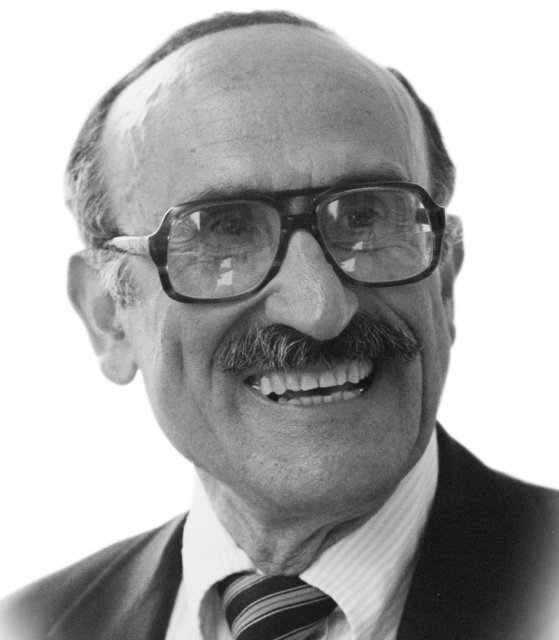
At 77, Herb Kelleher still gets a lot of "luv" from his employees. There is no one in aviation to match his street smarts and charisma.
HOWARD HUGHES’ SPRUCE GOOSE HANGAR MAY BE SOLD
The Spruce Goose – until recently the largest airplane in the world despite being built in the 1940s – is long gone from the Los Angeles area, but the hangar where it was built is still here. The plane, which was officially called Hercules, was built at the end of the WW II on a contract with the U.S. government, and was supposed to carry 750 troops. It was specifically designed to fly in the Pacific where flying boats were common. The contract went sour, the war was over, and the Hercules was forgotten by most everyone, but not by Hughes. The eccentric billionaire maintained it long into the fifties in flyable condition, until it was clear that the days of flying boats were over with the advent of the jet age.
Workers on top of the Hercules wing in the hangar in 1945, and the Spruce Goose just before its historical flight in 1947
Walt Disney, Inc., tried to make a money-making venture out of the duo - Queen Mary and Spruce Goose - and it was spectacular. It just failed to generate income.
The plane saw only one flight – and it was questionable if it was accidental or on purpose – when Howard Hughes and his design crew took the plane for a taxi ride. The plane lifted for about a minute for the historical flight, and that was all the flying it had done. Experts claim the plane was grossly underpowered with the prop engines (from here comes the famous Hughes’ quote: “You can make a barn fly if you put an engine strong enough on it.”) It was, nevertheless an incredible technical feat for the time, and later on, when Walt Disney Corporation purchased the flying boat, it was housed in a dome at Long Beach, right where the Queen Mary ship is anchored.
It was not making any money as an attraction and was later sold to Evergreen Aviation in McMinnville, OR, where it was restored and is now the centerpiece of one of the most beautiful aviation museums you will find. The redwood hangar, divided into two halves – one for building the wings and the other for the fuselage - is one of the largest wooden structures in the world and in itself was an engineering feat in its time. After the plane was moved, it remained empty until filmmakers realized that the structure would make a great film stage.
Currently, it is used mainly by TV production companies, as one can fit three stages in one wing of the hangar and can do simultaneous filming which cuts down on production times. The structure is now for sale, and real estate people estimate it might fetch around $60 million.
FAA LEVIES HEAVY FINES AGAINST AMERICAN AIRLINES
American Airlines has a tough luck this year after pointing fingers at Southwest Airlines. It is like they say – you start pointing fingers and pretty soon you’ll see fingers pointed back at you.
It is not quite clear who was the whistleblower in this case, but it is certain that American did not have much to say for itself when the FAA investigated AA’s lapses in safety – of both equipment and personnel.
First, the FAA said that American Airlines violated FAA safety regulations in December 2007 when it allowed operations of two MD-80 veteran planes with faulty auto pilots. Pilots who had flown those aircraft have repeatedly reported the problem in the log books and by phone, but neither of those two planes was pulled out of service during the holiday season.
The FAA summed it up very simple by saying that what AA had done was deferring some standard maintenance while continuing to fly the planes. The FAA says that this was discovered during “routine” review of plane books during regular periodic maintenance check. Knowing the FAA, it probably had a little help from some friends, too.
That was not the only violation. Though the FAA did not elaborate on the nature of the second violation concerning personnel, it only said that American had been operating a deficient drug and alcohol testing program.
The total for these violations? $7.1 million. It’s enough to drive you to a drink…
CIVILIANS FILE A SUIT AGAINST DELTA-NWA MERGER
A federal judge set November 5 as he starting date for the trial that hopes to block Delta-NWA merger. A group of passengers filed an antitrust suit in San Francisco, CA. The testimony from both passengers and airline experts might last as long as 10 days. However, it is expected that a ruling might be out as early as Thanksgiving.
The merger also underwent scrutiny by the European Union, and early in August it was given the green light. The European Commission signed off on the proposed merger saying the combination “would not raise competition concerns in Europe.”
Meanwhile Delta and Northwest pilots agreed to a joint contract to help push through the proposed merger, but still cannot agree on the seniority list make-up once the union takes over. The pilots will now go before a three-member arbitration panel, which could take up to two weeks of hearing to make a ruling. Terms of the contract will apply to both pilot groups when the merger comes through.
THE FIGHT OVER SANTA MONICA AIRPORT CONTINUES
As much as the Federal Aviation Administration (FAA) is trying to flex its muscle and enforce old federal laws and agreements between the federal government and the City of Santa Monica, CA, the residents of the coastal community say they have had enough.
Recently the State Senate approved advisory resolution sponsored by Assemblyman Ted Lieu and it was passed in the State Assembly by 73 to 0. The fight was not as easy in the Senate, where the vote ended up 21 to 16 – and obviously both the FAA and owners of larger jets using Santa Monica Municipal Airport have done a fair bit of lobbying.
The airport was used primarily by general aviation aircraft and Douglas Corporation, then the main employer in the region up until the 1950s. In those days the airport was called Clover Field. But Clover Field’s runway became too small in the jet age to test airliners on so Douglas Corporation relocated to Long Beach.
That’s when the city was hoping to attract other customers, but not very many fixed-base operators (FBOs) moved into the airport. Not much happened there except a few hangars went up, giving it a modern look, and the Museum of Flying came and went after a couple of decades, because the rent was too high.
The tie down fees for the general aviation aircraft also rose tremendously – some say it was partly the greed of the city, and partly the effort to drive out the small plane owners so that more space would be available for the new breed of flyers – the corporate jets.
When the smaller corporate jets moved in, the main nuisance was the noise, and the residents from the area – some living as close as 300 feet from the runway – put up with it. But when the larger Citation Xs and Gulfstream IVs moved in, the 5,000 feet long runway became too short. These jets have approach speeds between 130 and 190 mph, and Santa Monica does not have the overrun areas needed for planes to go to in case the landing is not picture perfect.
The FAA says that Santa Monica could institute safety measures to take care of this problem if the city wanted to. And it pulls out half a century old writ saying that the city has the obligation to the FAA to let the new jets stay.
The city tried to implement the ban on the heavier jets in April, but was overruled by the federal judge, who said the FAA papers are legally binding. But then, fifty years ago no one envisioned the corporate jets storming the small airport.
Corporate aviation using the faster, heavier jets amount to about 7% of Santa Monica’s traffic, but contributes financially more than the general aviation aircraft for which the airport was built.
The citizens of Santa Monica are fully behind the ban on the jets; the corporate aviation has more money available to stuff the right pockets in the right places.
TEN DIE IN A UTAH PLANE CRASH
A twin-engine Beech King Air 100, a high performance plane used for corporate flying, took off Canyonlands Airport, about 18 miles northwest of a small town called Moab, UT. Moab was one of the stops the people in the plane made very regularly, providing dermatology care to the indigent in Utah, Arizona and Nevada.
Everything was routine – the flight into Moab, the work with the patients, and the result of the work was the same as usual – the feeling of fulfillment, of doing something that was both useful and needed. It was satisfaction from a job well done.
But this time the happiness did not last too long, as the plane went down shortly after take-off and crashed. An explosion and an inferno from tanks full of fuel followed. By the time the rescue teams arrived, they found wreckage that hardly resembled a plane, burned to a crisp.
No one survived the crash – all ten aboard died: David White, the pilot who worked for Leavitt Group Wings that owned the aircraft; and then all the members of Southwest Skin and Cancer/Red Canyon Aesthetics & Medical Spa, a dermatology company based in Cedar City, UT. They were Dr. Lansing Ellsworth, Medical Director, 50; his son Dallin Ellsworth, 23; David Goddard, 60 and his daughter Cecilee Goddard, 31; Mandy Johnson; Marcie Tillery, 29; Valerie Imlay, 52; Keith Shumway, 29 and Camie Vigil, 25.
Preliminary investigation confirmed that White was an experienced pilot with hundreds of hours flown in the type of plane that went down. The company owned the plane for 6 years and followed all maintenance guidelines. There has never been any serious problem with the aircraft since it was built in 1975.
Even though the plane was almost totally consumed by fire, he National Transportation Safety Board said they had hoped to have some clues for a preliminary report as to the plane malfunction in about two to three weeks. No foul play is suspected.
THIRTY-NINE TIPS TO LIVE A FULFILLING LIFE
1.Take a 30-minute walk every day and while you walk, smile. It is the ultimate antidepressant.
2.Sit in silence for at least 10 minutes every day.
3.Get a video-recorder to tape you late shows and get more sleep.
4.When you wake up in the morning, complete the following statement: “My purpose is to _______ today.”
5.Live every day with the three Es: Empathy, Energy and Enthusiasm.
6.Spend time reading books and watching movies. You may realize how fortunate you are.
7.Set aside time for some type of meditation – tai-chi, yoga or plain old-fashioned prayer.
8.Spend some time with people over the age of 70 and under the age of 7.
9.Dream more while you are awake.
10.Eat more foods that grow on trees and plants, and less of those that are manufactured in plants.
11.De easy on your digestive tract – drink green tea, eat more berries, nuts, garlic and tomatoes.
12.Try to make people smile – at least three a day.
13.Get your desk and house organized – it adds to your energy.
14.Don’t waste time on gossip – life is too short for that.
15.Keep in mind that the ultimate education you get is from the “University of Life” – living is learning.
16.Smile and laugh more – it does wonders for you and the others.
17.Life may not be fair, but it is still very good.
18.Don’t waste time and energy on hatred.
19.Don’t take yourself too seriously – no one else does.
20.Don’t try to win every argument. It’s okay to disagree.
21.Don’t let your past mess up your future.
22.Don’t compare your life with the lives of others. We are all different, and you do not know their problems.
23.Don’t complain about your misery – YOU are in charge of your happiness.
24.When facing a disaster, ask yourself how will it matter in five years.
25.Forgive everyone for everything.
26.What other people think or do is none of your business.
27.Time heals almost everything – give your pain time.
28.Keep in mind that No matter how good or bad a situation is, it will change.
29.Your job will not take care of you when you get sick, your friends will. Stay in touch with them.
30.Get rid of anything that isn’t useful, beautiful or joyful. That applies to relationships as well.
31.Envy is a waste of time – you already have all you need.
32.Believe that the best is yet to come.
33.No matter how you feel, get up, dress up and show up. Showing up counts.
34.Try to do the right things.
35.Be in touch with your family. They may know you the best.
36.Each night before you go to sleep, end the day with the following statements: Today I accomplished _________; and I am thankful for __.
37.Remember that you are blessed way too much to feel stressed.
38.Enjoy the your life. Life is a ride and you go this way only once – enjoy it.
39.Always remember those who are less fortunate than yourself.
Trying it will not hurt, that’s for sure.
CONTINENTAL DESERTS TO STAR ALLIANCE
Continental and Star Alliance member airlines have asked the Department of Transportation to extend anti-trust immunity, which is enjoyed by al Star Alliance members, to Continental Airlines. This request came only days after Continental’s former announcement that it was leaving SkyTeam Alliance headed by Delta Airlines
About a month ago, at the national Business Travel Association convention in Los Angeles, Continental unveiled its version of
Its new first class and business class seats for B-757, B-777 and B-787 aircraft, showing the company means business in looking after business people.
That has put on hold any further speculations that Delta and Continental might hold secret talks about merger, and strengthened the rumors that Continental is not totally opposed to merger with United.
VIRGIN AMERICA GOES TO NICKEL AND DIMING, TOO
In August Virgin America announced it would create a sort of an “economy plus” in the front of its B-737s. The seating with a 38-inch pitch (leg room from the end legs of the seat in front of you to the front legs of your seat) is called “Main Cabin Select” and aside from more legroom it will also offer priority check-in and boarding and complimentary food service from the on-board menu.
Passengers will be able to book this class of service as of September 15 and it will start operating on October 15. The ticket prices will be about $50-100 higher than the “poor man’s cabin service.”
NO GUNSLINGERS AT ATLANTA INTERNATIONAL
Georgians love controversy and love to argue. They also love to carry guns, especially concealed guns. The new law that took effect in July makes carrying concealed firearms in public places easier then ever.
And public places include airports. The airport saw what a headache guns could be if every Tom, Dick and Harry packs his gun just for the hell of it. It became obvious, that some sort of an injunction was needed, and Atlanta Hartsfield-Jackson International Airport got it on August 11.
U.S. District Judge Marvin Snoob expressed concern that allowing guns at the airport could cause serious economic damage and also could be a serious threat to public safety. He said, that if only a gun was discharge accidentally, it would create enormous stampede where people could be stumped to death.
The decision did not sit too well with the gun-happy public and a suit was filed against the airport to allow guns at least in certain areas, such as between the parking areas and the terminal, said Gov. Sonny Perdue. He said his wife might like to carry a gun when going to her car at the airport and she should have the freedom to do so.
The airport officials wish to keep the airport a gun-free area and have sent a formal request to the Transportation Security Administration (TSA), a branch of Homeland Security, with a request to amend the gun law, and make all airports gun-free.
10 KILLED IN A GUATEMALA CRASH
According to the media it was not certain how many people were on board of the Cessna Caravan, a reliable workhorse for smaller airports. But we know that ten people on board of the plane did not survive the crash on August 24.
The plane took off from Guatemala City and was on its way to El Estor, a village where an American humanitarian group called Choice Humanitarian builds homes for the needy. There were at least nine Americans on that plane, but it is not clear if all of them belonged to the same group.
The cockpit crew was from Guatemala. Apparently, about 45 minutes into the flight they radioed that there was a problem with the plane and they attempted an emergency landing in a field 60 miles out of Guatemala City, said Jose Carlos, Chief of the Guatemala Civil Aviation.
Eight passengers along with both pilots were killed, five of them Americans. Remaining four Americans were airlifted to a hospital for immediate emergency care.
Aero Rutaya Maya, the company that owns and operates the plane said that only twelve people were on the plane. The actual head count of the dead and survivors amounted to 14, giving some clue that the plane may have gone down because of weight and balance problems from overloading.
OPENSKIES AIRLINE EXPANDS TO AMSTERDAM
As soon as OpenSkies closed the deal with French L’Avion and started operating flight from Paris-Orly, it turned its attention on another market, which has traditionally been quite profitable and was shared by very few – Amsterdam.
Amsterdam is regaining its importance as a diamond-trading center of the world, legal prostitution and large business deals among the members of the European Union. KLM, Northwest, United and Delta have been flying the route for many years without interruption, though not always making money.
OpenSkies thinks that there is a good market for a single Business Class flying between New York and Amsterdam. The B-757, which was initially configured for two-class operations will be re-configured for Business only, and the New York – Amsterdam service will be launched on October 15.
OpenSkies felt it was a good timing, even though the full integration of L’Avion will be completed in 2009.
THE WORST SPANISH AIR CRASH IN QUARTER OF A CENTURY CLAIMS 154 LIVES
The 15-year old Spanair McDonnell-Douglas MD-82 was getting its outside temperature probe fixed, while a full complement of passengers – including many children and even infants, were sitting inside impatiently. The plane was due to take off from the modern Barajas International Airport in Madrid, Spain, an hour ago, but still no luck. Most of the passengers were eager vacationers looking forward to a dip in the ocean and sunning themselves on the beaches of Canary Islands.
Spanair flies a number of older MD-82s (left); part of wreckage of Flight JK 5022.
The tail broke off on impact; rescuers resuscitate a survivor.
Bodies in a makeshift morgue
The plane had a routine check-up just in January, and nothing should go wrong. Scandinavian Airways (SAS), known for great safety record, is the parent company of Spanair, a subsidiary operating about 600 flights a day with more than 60 airplanes.
Spanair’s Flight JK 5022 – as this flight was referred to – originated in Barcelona and Madrid was just a stopover. It was a code-share flight with the German Lufthansa.
The temperature probe was finally fixed, and everyone’s anxiety from the waiting changed back into the happy anxiety of anticipating landing in Las Palmas, where the Canary Islands airport is
located. Most people have forgotten that the worst aviation accident ever occurred in Las Palmas in 1977 when a KLM B-747 and Pan Am B-747 collided on take off in poor visibility. The casualties from this crash were enormous – 583 people died in the crash. Las Palmas is a little tricky airport at times.
The MD-82 lined up on the taxiway and gathered up speed. As soon as it peeled off the runway, it veered to the right, and unable to gain altitude it crashed a short distance past the end of the runway. It exploded and broke into pieces on impact. The charred path left behind the fuselage was nearly half a mile long.
Emergency vehicles – both ambulances and fire trucks – arrived within seconds only to see a scene of a true catastrophe, with bodies and body parts spread along the flight path. Rescuers said some of the burned bodies were so hot they could not even hold them with bare hands.
A few hours later ambulances were replaced by a convoy of black hearses which came to collect the bodies wrapped in white sheets for transport to a makeshift morgue. It was set up in Madrid’s main convention center, which also served as a morgue in 2004 after Islamic bombing in Madrid.
Relatives of the air crash victims were brought to Madrid to attempt to identify the charred bodies.
One of the burned survivors died a few days later in a hospital. One of the 18 survivors who suffered only a broken leg and a broken rib said she had hoped the plane would be changed after the first malfunction. But a mechanic “fixed the problem and signed it off,” she said.
As the investigation got under way, with the U.S. National Transport Safety Board team taking part, questions were arising. Spanair has been a troubled carrier for a while. As much as SAS tried to sell the money-losing airline, there have been no takers. Most recently the pilots threatened to strike to protest the “abuse” of cockpit and cabin crews with mandatory overtime. SAS plans to cut 1,000 more jobs.
It does appear at this time, that no foul play was involved.
SOME U.S. AIRLINES BEHAVE LIKE ROBIN HOOD?
That’s right – some major airlines take away from those who have something and actually give it to those who often have little more than grief.
In recent months most airlines have slapped a hefty “baggage surcharge” on surfboards. The surfing community is all up in arms about it – it’s no wonder, because surfboards used to count as one piece of baggage, and if it was an extra, the surcharge used to be very modest. Not now – each surfboard costs $300 or more to transport one way.
Surfers tried FedEx and realized that FedEx is in the same league with the other airlines. It charges up to thousands to some destinations. Surfers try to fight this, especially since golfers – usually a little more affluent group in our society – pay no extra fees for much heavier bag with golf clubs. They still can take the golf bag with them in lieu of a piece of luggage.
And so the surfers are fighting it on the Internet and in the press and in some ways they might have a point. Except for one thing. Traditionally, if you dented a surfboard, the surfers were trying to get the airline for a lot more than just the value of the board. Ding a golf bag and no one even notices. Surfboards require special handling by the airlines – manual transportation from the counter to the aircraft and anywhere in between. The golf bag goes on a conveyor belt.
Surfers have gone as far as publicly request travelers to boycott airlines that have the steep charged for their boards – Delta, Continental and United. It actually almost seems that those airlines simply do not wish to handle the boards because often they are not as accustomed to it.
Qantas and Air New Zealand don’t even wink when a surfer checks in his or her board – they do not even charge for it.
But before you start yelling again “greed” and accuse airlines of ripping travelers off, we must say that the same airlines have a heart – they waive baggage fees for the military on active duty. A duffle bag with all the gear might cost a Soldier as much as $300-400.
The military can hardly afford anything that steep. We felt that it was pretty heartless of the government to bring Soldiers back from deployment, dump them at the first US gateway and from there the Soldiers have to pay their own fare and look after all travel arrangements for home.
So, before the surfers start judging the airlines, they should consider why the boards cost so much to transport [it can become expensive for the airlines], and what the others go through, and they should count their blessings if their biggest problem is to pay their board baggage fee. Others have much less, and we are glad that the airlines see it and help out.
THE FAA FOUND GUILTY IN TORRANCE CRASH IN 2003
It took 5 years and a lot of effort of the only survivor of the crash in Torrance, CA, in which two choppers crashed into each other after receiving confusing instructions from a hurried air traffic controller. The survivor – a student pilot who flew solo in a Robinson-22 helicopter – tried primarily to clear his name as the FAA pointed him out as the cause of the accident.
Further investigation by the District Judge came up with data that put the blame on the ATC tower personnel. It was only thanks to the judge’s unusual effort to find the facts that the truth was not hidden or buried in the 2007 FAA case findings. The new, unbiased fact-finding results and judge’s ruling were made public on August 4.
U.S. District judge Flora-Marie Cooper ordered the FAA to pay $4.5 million to the widow and teenage daughter of Robert Bailey, an instructor who died in that crash. He was 55 years old and highly regarded in the Southern California aviation community.
It is also expected that there will be another decision made to clear the student pilot who was critically injured and now crippled.
American Airlines committed eight of its planes to promote “Susan G. Komen for Cure,” a charitable breast cancer organization. American and the Komen Group have been raising money for breast cancer research for nearly 20 years.
Selecting eight planes to carry the message in the form of a pink ribbon is not accidental – approximately one out of 8 women will get breast cancer in their lifetime. American committed to another eight – donating $8 million over the next 8 years.
IF YOU SEE A TOUCH OF PINK ON AA’S PLANES, YOUR EYES ARE NOT DECEIVING YOU…
American’s donation will be funding 5-year breast cancer research at the University of Texas M.D. Anderson Cancer Center. American hopes to raise the money by extra-curricular activities such as its annual celebrity tennis and golf events and its “Miles for Cure” program.
So, if you happen fly American and see the pink ribbon, ask how you can contribute. Every dollar counts.
RYANAIR WILL SUFFER THE FIRST FINANCIAL LOSS
RyanAir announced it would most likely suffer its first annual financial loss as its second quarter income this year was down 84%, netting only $33 million. All that after it announced in June that it has great fiscal year results – earnings rose 19%, which boosted stocks to 31.00 (Euros), which translates to US$48.70.
The Dublin-based airline, however, has published a revised prognosis; despite decreased income, it will shelve the proposed 5% increase in ticket prices, and instead will offer prices that are 5% lower. It is hoping that this decrease may attract travelers during the winter months.
HIGH DEATH TOLL IN KYRGYZSTAN JETLINER CRASH
A Boeing B-737 chartered by an Iranian tourism company took off from Manas International Airport, which is about 18 miles from Bishek, Kyrgyzstan capital. Kyrgyzstan is one of the former Soviet Union republics where poverty is rampant. There were about 90 people on board, including a high school championship basketball team. The plane took off around 8:30pm and in a few
minutes the Fourteen ambulances were dispatched to the airport from Bishek – all the ambulances that were available in the capital at that time. But when they arrived, the saw a very dismal picture. They saw mostly charred bodies. Over 20 passengers were pulled out alive, about four of them in critical condition.
Ambulances from a nearby U.S. Air
Force Base also arrived and assisted with triage and transport of the injured. The Boeing Company has dispatched its investigative team to assist with the analysis of the crash and determining its cause.
UNITED SCRAPING THE BOTTOM OF THE BARREL
On August 28, United Airlines became the first airline that firmly confirmed an upcoming layoff of about 10% of its flight attendants. Translated into real numbers, it means that about 1,550 flight attendant positions will be eliminated company-wide.
According to the union representatives (Association of Flight Attendants) the furloughs will become effective on Halloween, October 31. United is forced to make the cut because of the significant cut in its unprofitable routes.
The unions, as usual, are not able to prevent this lay-off and is upset that it will not be able to collect the $39.00 monthly fees from those 1,550 unfortunate people. Additional 5,500 non-flying, unionized jobs will be also cut. It is iust a warning light for flight attendants and ground personnel from other airlines where cuts in routes have been instituted. Their airlines will do the same, union or no union.
About 100 planes from UAL livery will be flown to the desert and be mothballed. Pilots may be next on the furlough list.
United is hoping to recoup some money by further fees imposed on the passengers. Two days after UAL announced the furloughs, it announced yet another extra charge – up to $20 – as a fuel surcharge round trip.
Fares were also increased. Flights of 400 miles or less went up $10, and the next group of flights that was hit really hard were routes with 751 miles and up, where the tickets have gone up more significantly. The only flights which are not affected are flights between Washington – Dulles and Kuwait City.
Fares on other routes where UAL is competing with low cost carriers – mainly Southwest – cannot be increased and United operates them with at a loss.
You might also be wise to eat before departing on UAL to Europe. Contrary to the traditional two, or even three meals passengers got during the flights, you might end up hungry if you don’t stuff yourself at home.
On August 23, UAL announced that it will stop serving free meals on transatlantic flights in order to save some money for fuel. Starting October 1, all food in economy will be “for sale only,” very much like on domestic flights. United hopes to get some cash back to offset about $3.3 billion loss in the first 3 quarters of this year.
A CESSNA 172 CRASHES NEAR BURBANK AIRPORT
Almost like in old Hollywood movies that were shot in the Burbank Studios, this crash had a happy ending. On August 29, a Cessna 172 with three people on board overshot the runway while attempting to land, and the rest was indeed like a spectacle from a movie.
The plane hit the power lines and caused bright fireworks, then flipped over and landed on top of an empty parked car. The three occupants – a male pilot and another male with a female walked away from the plane with the help of nearby construction workers.
The male passenger bled profusely from his arm, and people around helped him with a makeshift tourniquet and bandages. Some eyewitnesses said the pane was wobbling significantly as it attempted landing. The FAA has not released any statement, but it appears that wind may have been a factor in overshooting the runway.
AMERICAN AIRLINES OFFERS IN-FLIGHT WEB ACCESS
From Associated Press
One of the few remaining Internet-free havens vanished on August 20 as American Airlines launched airborne e-mail, Web and other on-line services on some of its longer non-stop flights.
The move could create a new stream of revenue for aviation industry facing high fuel prices and other challenges. But it also could create new headaches as passengers retrieve sensitive e-mails and websites in confined quarters.
It could also end a common excuse people have to avoid checking “urgent” e-mail requests from their bosses.
American, a unit of Ft. Worth-based AMR Corporation, tested in-flight Internet access on two flight June 25. With Wednesday’s launch the airline is making service available for $12.95 per flight on its 15 Boeing B-767-200 planes connecting New York with Los Angeles, San Francisco and Miami.
The system is designed by Aircell Company and other airlines will be using it – Delta, Virgin America and US Airways.
Other airlines may use a similar system marketed by another company, a subsidiary of JetBlue. Jet Blue is already using e-mail, but their system has some limitations in comparison with Aircell’s. Continental said they planed to look at JetBlue’s system, which has been in use longer.
The greatest advantage of the Aircell system is that it is compatible both with Microsoft and Apple products, the system will block internet-based phone calls (thank god).
Of course, the flight attendant union at American (this really illustrates their thinking) jumped right in and demanded that American Airlines creates some sort of a “screening device” that would not allow people on the plane to log on – you guessed it – pornographic sites.
In my years of flying as a flight attendant, there was only one time that I had to ask a man to put away his Playboy, when he browsed through it on the plane, and he complied without any problems.
Don’t flight attendants make periodic ”walk throughs” and talk to people any more?
AIRLINES IMPROVED ON-TIME PERFORMANCE IN JUNE
It is an improvement that has to be viewed with caution – the Department of Transportation released figures for June, and in comparison with June a year ago, there was a slight improvement. There were fewer complaints by passengers and arrivals improved by 2.7% in comparison with the last year.
However, in comparison with May 2008 the statistics are not as great – June shows a higher number of delays tha